Patch Notes Are a Strategy Document

Image: SummonerTactics
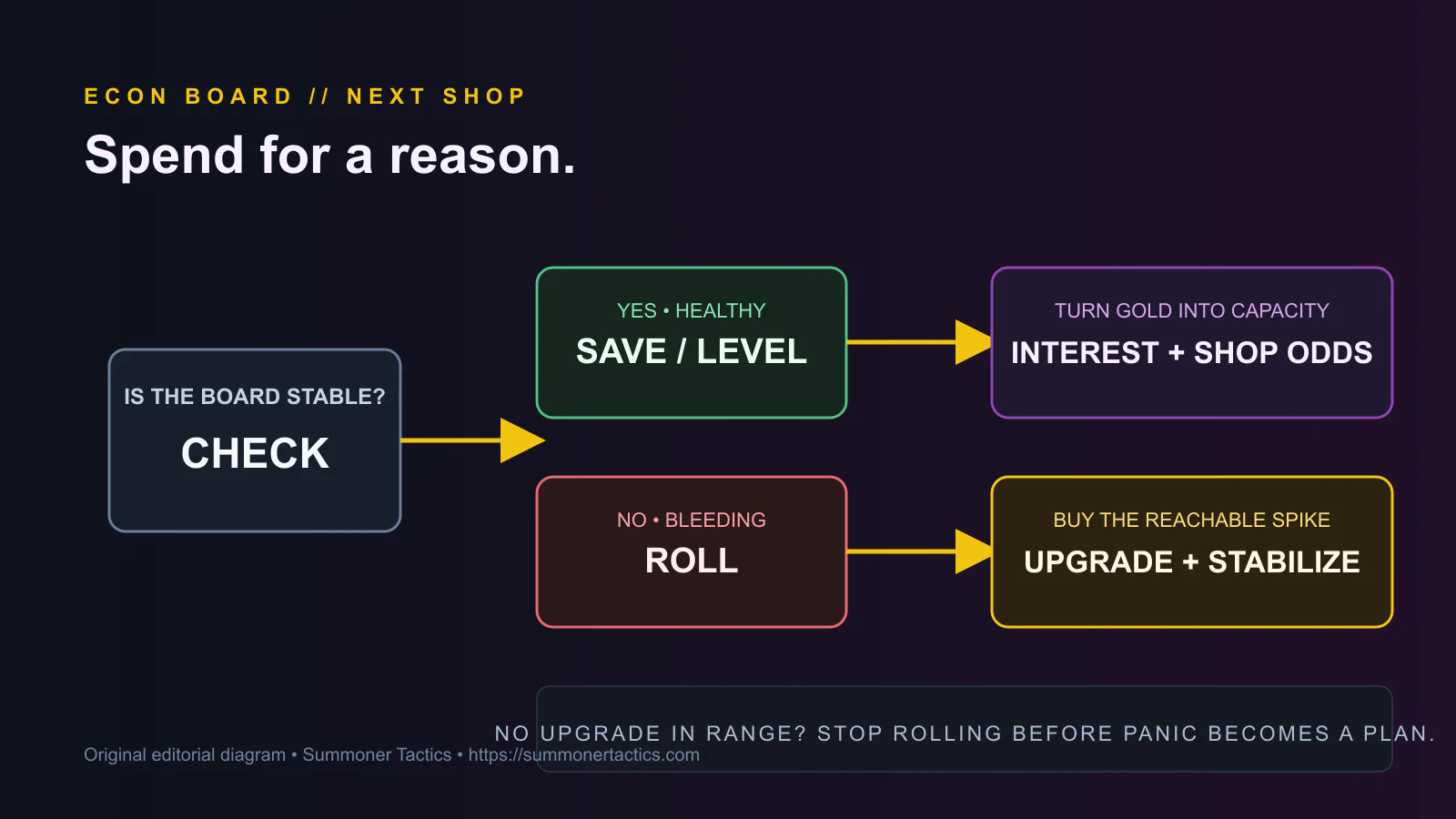
Patch notes are more useful than a screenshot of a “best comp.” Read the official changes for costs, damage, traits, item rules, and system adjustments, then ask which decisions moved. A cheaper unit can change roll timing; a range change can change the safe side of the board.
Translate changes into questions
For each change, write: which stage is affected, what the old threshold was, what the new threshold might be, and what evidence would disprove your first read. Test the change across several lobbies rather than treating one win as proof.
Separate system from composition
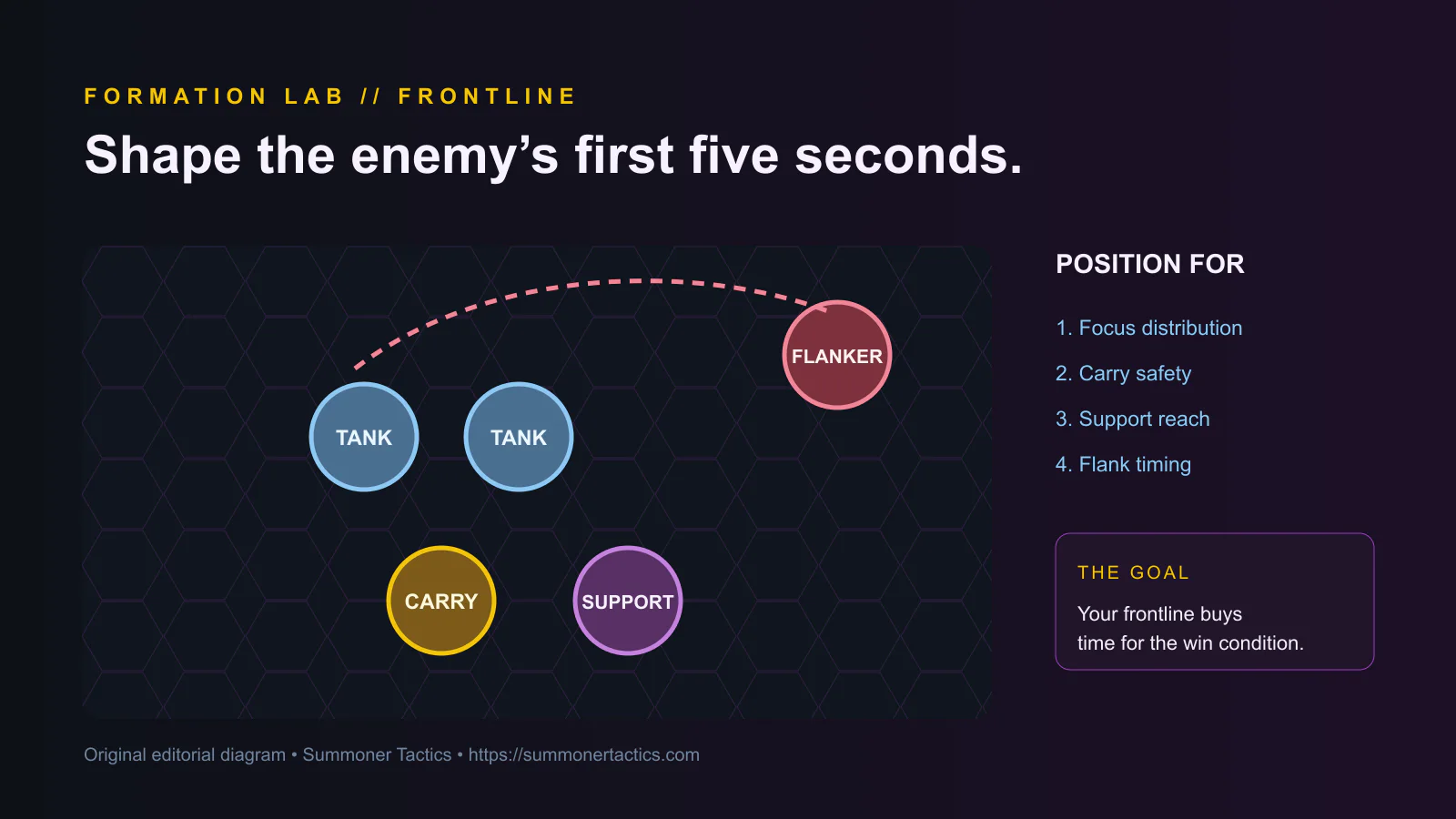
Tier lists are snapshots. Principles such as protecting a carry, matching threat angles, preserving economy options, and scouting the lobby survive longer. Use a composition as a hypothesis about those principles, not as a substitute for them.
Record the patch
When you review a replay, store the game version, augment or item rules, lobby context, and the round where the decision mattered. A good note remains understandable after the next update.
Primary source
auto-battlerpatch notespositioningstrategymeta