Econ Tempo: When to Roll, When to Save, When to Level
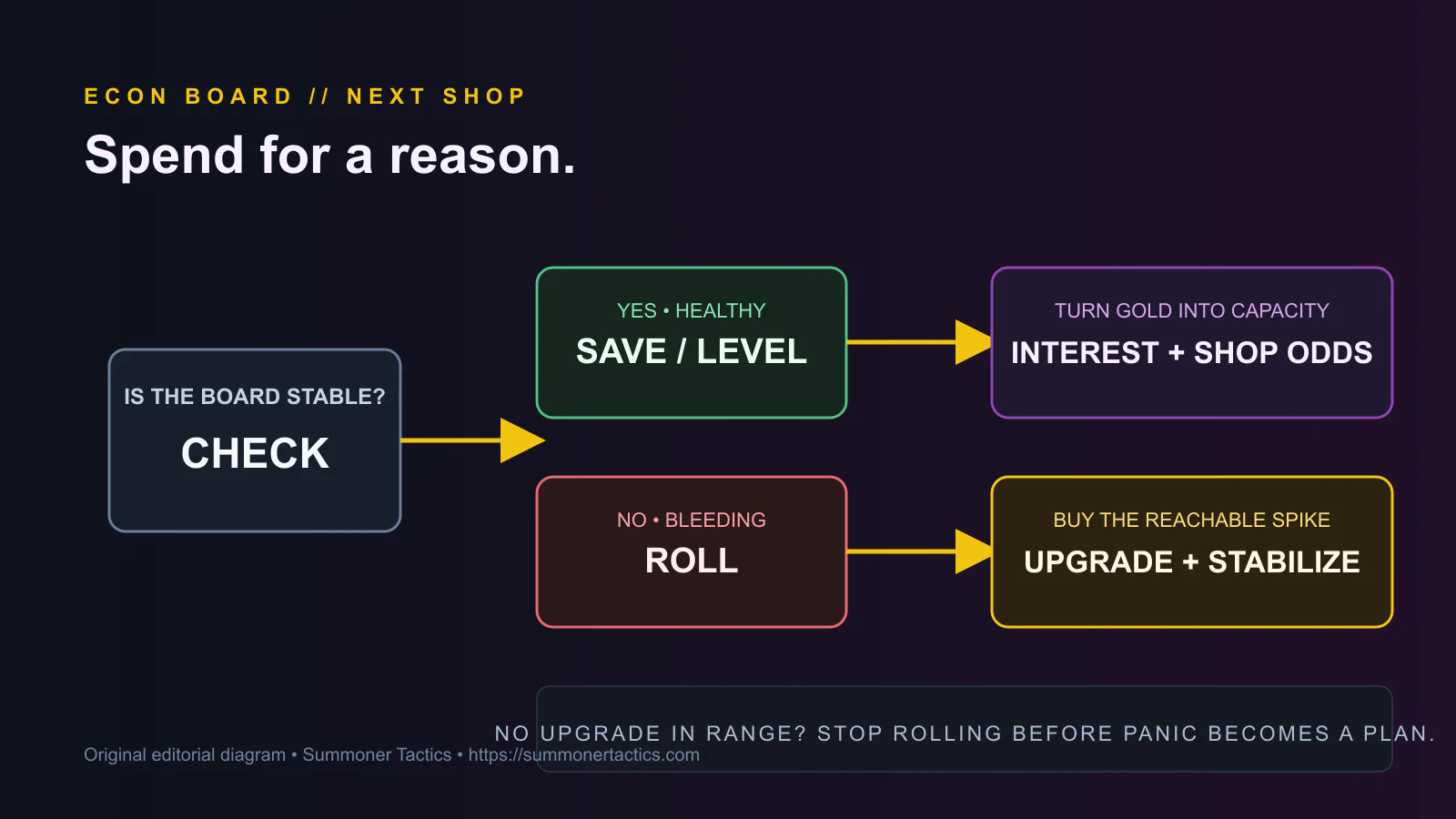
Image: Summoner Tactics
Ask ten laddering players why they lost and most will point at their board. Ask a coach and they will point at a single misjudged round: a panic roll at the wrong level, a greedy save while health drained away, a level-up that came two rounds too late. Econ tempo is the art of putting your gold to work at exactly the right moment, and it is where most of the rating between good and great actually lives.
There are only three moves: roll, save, and level. What makes tempo hard is that the correct move changes every round based on your health, your gold, and what your opponents are building. This is a framework for choosing, not a script to memorize.
The One Question Behind Every Move
Every gold decision answers the same question: do I need board strength now, or can I buy more of it later?
- Roll buys strength now, at the cost of your bank and its interest.
- Save buys strength later by letting gold compound.
- Level buys access to stronger units and a bigger board, trading immediate gold for better odds and cap.
Once you frame all three as answers to that single question, the decision stops being three separate skills and becomes one read: how urgent is my situation?
When to Roll
Roll when strength now is worth more than gold later. In practice that means a few clear situations:
- Your health is low enough that another loss round is dangerous.
- You are one or two units from a game-defining upgrade and your odds at the current level are genuinely good.
- You are holding a strong board and rolling to press a win streak into a decisive lead.
The trap is rolling out of boredom or frustration below the interest cap. That is not a strategy; it is setting your economy on fire. If you cannot name the specific reason you are rolling, put the gold back in the bank.
When to Save
Save when you are stable and time is on your side. If your health is comfortable and your board holds its own, banking to the interest cap is almost always the highest-value move. Compounding gold is the closest thing the genre has to free power. The discipline is emotional as much as strategic: you have to be willing to take a loss round on purpose, trusting that the gold you keep buys back more than the health you spend.
When to Level
Leveling is the move players misjudge most. Level up when you want higher-tier units, a larger board, or better roll odds sooner than saving alone would give you.
| Situation | Preferred move | Reasoning |
|---|---|---|
| Stable, healthy, strong board | Save | Compound gold toward a bigger spike |
| Low health, weak board | Roll | Stabilize before interest matters |
| Rich, want tier odds now | Level | Convert surplus into access |
| Even lobby, mid game | Level on curve | Stay ahead on board size |
Reading this table is really reading your own position. The strongest players do not force a favorite line; they let health and board dictate whether this round is a roll round, a save round, or a level round.
FAQ
Should I ever roll below the interest cap? Only in a genuine emergency, when losing the next round threatens to end your game. Otherwise the interest you burn outweighs the strength you buy.
How do I know if I leveled too late? If opponents consistently field larger or higher-tier boards than you in the mid game, you are leveling behind the curve. Push levels a round earlier next game.
Is there a universal econ rule across all auto-battlers? Yes: protect your bank when stable, spend when survival is at stake, and level to keep pace with the lobby. The numbers change; the logic does not.
Econ tempo is not a build you copy, it is a question you answer every round. Do I need strength now or later? Match the honest answer to your health and your board, and your power spikes will start landing exactly when you need them.
auto-battlerecon-tempogold-managementdecision-makingstrategy