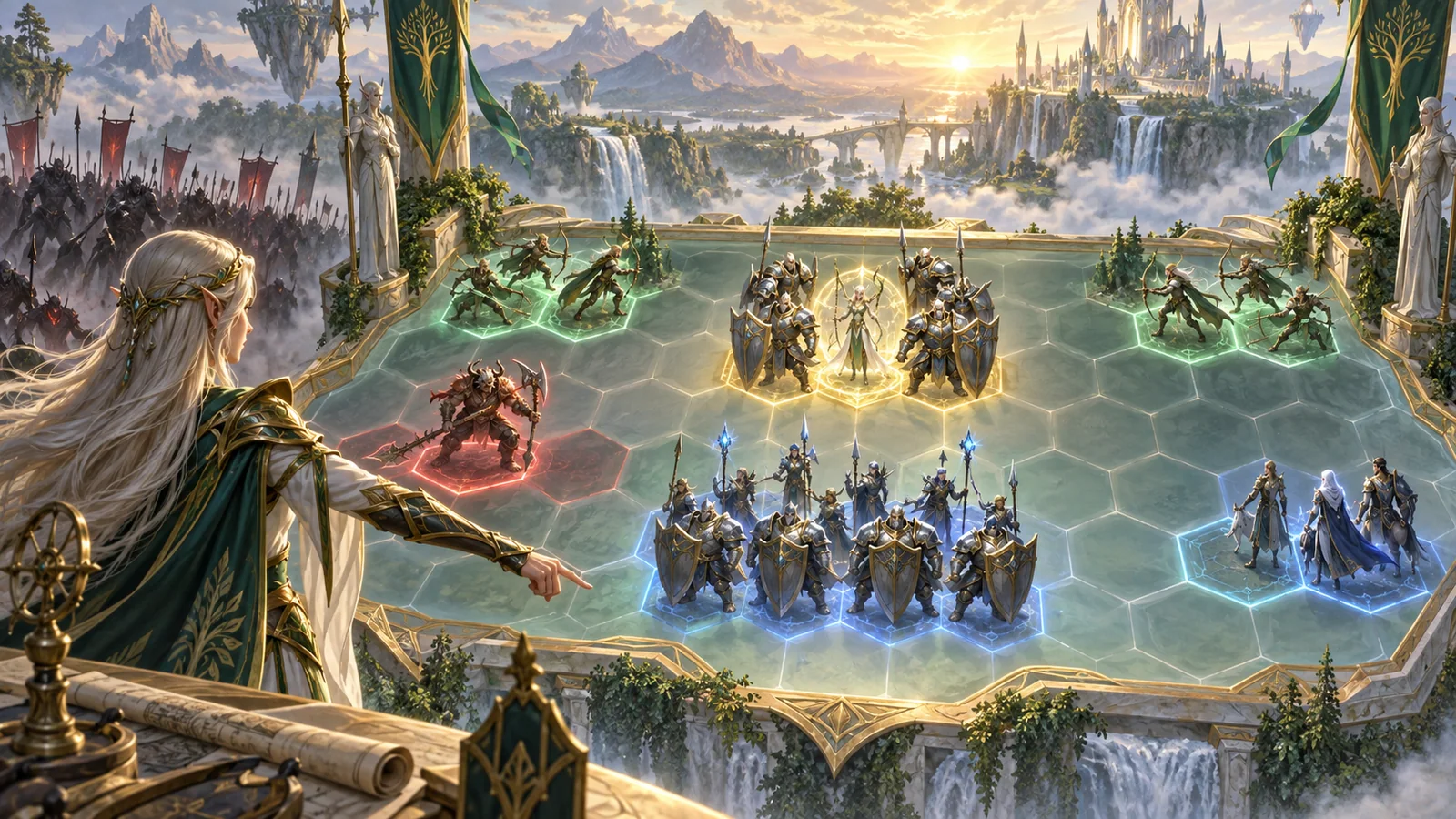
Building an Unkillable Frontline: Positioning Theory for 2026
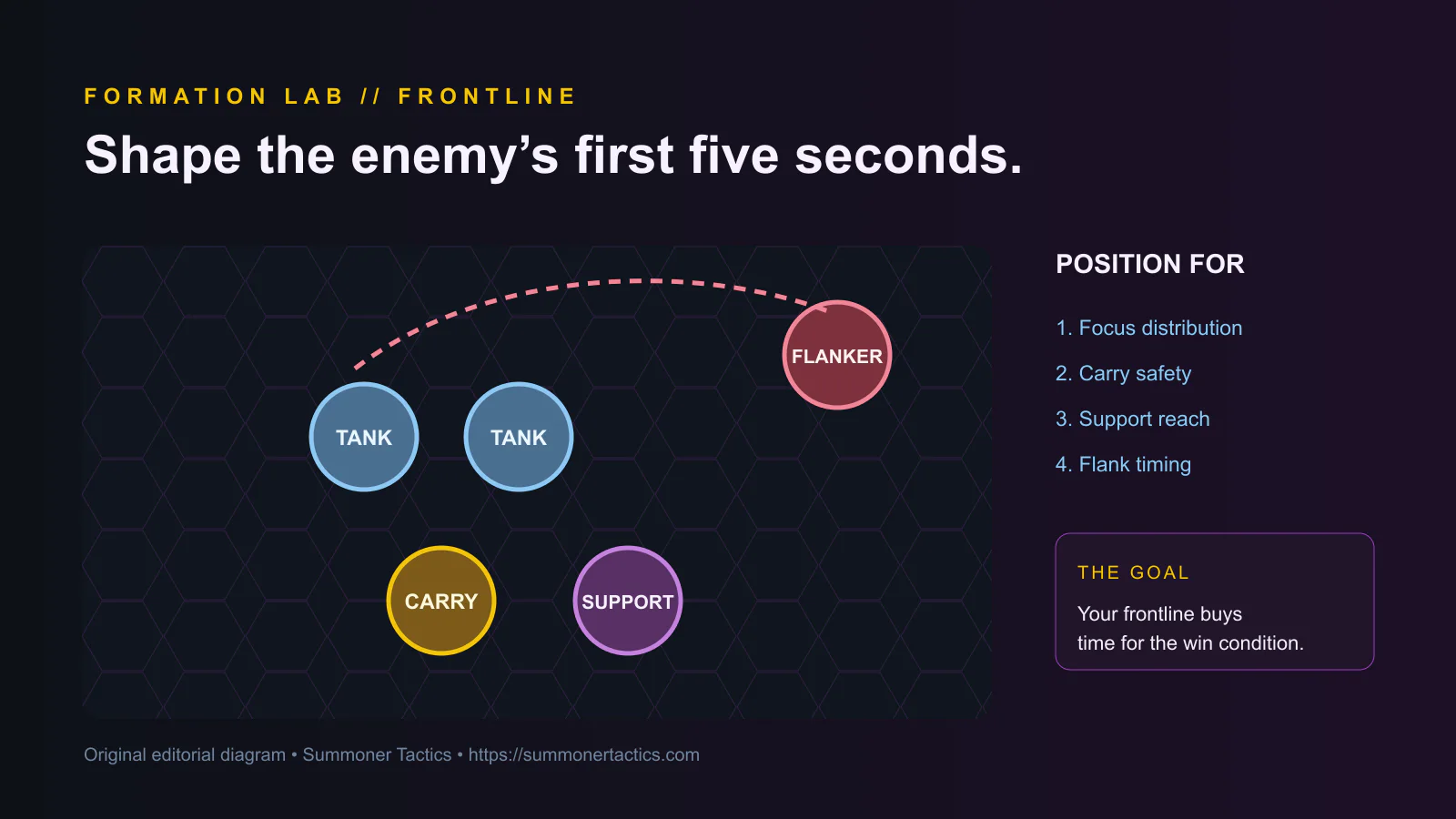
Image: Summoner Tactics
Two players field the identical units. One wins the fight comfortably; the other watches their carry evaporate in three seconds. The difference is not luck and it is not stats, it is positioning. In auto-battlers you do not control your units once combat starts, which means the only combat decision you get is where they stand. That single decision, made well, is worth more than most upgrades.
A frontline is not just your tankiest units shoved forward. It is a deliberate structure designed to answer one question: who gets hit first, and for how long? Master that and you build boards that survive fights they statistically should have lost.
What a Frontline Is Actually For
The frontline has one job, and it is not to deal damage. Its job is to buy time. Every second your tanks stay alive is a second your damage dealers keep firing from safety. A frontline that trades evenly and dies is doing its job badly; a frontline that soaks focus and stalls is doing it perfectly, even if it never lands a killing blow.
That reframing changes how you build it. You are not looking for the units with the biggest health bars in isolation. You are looking for units that draw enemy attention, occupy space, and refuse to fall on schedule.
The Three Layers of a Board
Think of your board in three layers, front to back.
- The anchor line. Your durable units, placed to make first contact and absorb the opening burst.
- The disruption layer. Units that reposition, stun, or peel, sitting just behind the anchors to break up enemy dives.
- The carry pocket. Your damage dealers, tucked into the corner or backline the enemy has the hardest time reaching.
The art is in the seams between layers. Enemy assassins and divers are built to skip your anchors and reach the carry pocket. Your job is to make that trip as long and painful as possible by controlling the geometry of the board.
Positioning Patterns That Work
Certain placements repeat across the genre because the underlying targeting logic is similar in most titles.
| Pattern | What it does | Best against |
|---|---|---|
| Corner carry | Maximizes the distance divers must travel | Assassin and dive comps |
| Spread backline | Prevents area damage from hitting multiple carries | Splash and bounce damage |
| Clumped front | Concentrates buffs and heals on the anchor line | Sustained frontline fights |
| Bait unit | Offers a tempting off-corner target to misdirect focus | Predictable target logic |
Reading this table is really reading your opponent. Positioning is reactive: you scout what the lobby is fielding, then place to counter the specific threat that most wants to kill your carry. A corner that is perfect against assassins can be a liability against a board built to punish clumping.
The single most common mistake is placing carries out of habit, in the same hex every game. Skilled players adjust placement every round based on the boards they are about to face, moving a carry two hexes to dodge a known threat. That two-hex shuffle is often the whole fight.
Squad-composition thinking travels well beyond auto-battlers, too. Studios building squad-survival experiences, like BudLeiser’s upcoming MECH Stranded, wrestle with the same core question of who takes the hit and who stays protected, just with mechs instead of hexes.
FAQ
Should my tankiest unit always be front and center? Usually your anchors take the front, but center is not automatic. Place them where the enemy makes first contact, which shifts depending on their board.
How do I protect a carry from assassins? Use the corner farthest from the enemy dive threat and consider a bait unit to misdirect their target logic away from your real damage.
Do I really need to reposition every round? Against a varied lobby, yes. Static placement is predictable and exploitable. A round-by-round adjustment is one of the cheapest edges available.
Positioning is the one combat lever you fully control, and a frontline built to buy time rather than trade blows is what wins fights on even boards. Scout the threat, place to control who gets hit first, and let your carries do their work from safety.
auto-battlerpositioningfrontlinecomposition2026